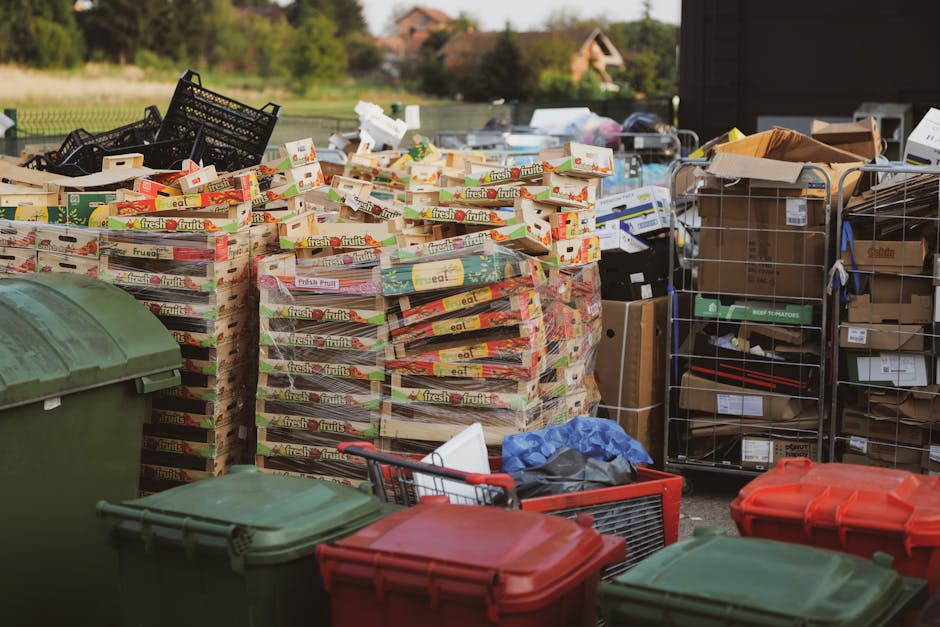
What to know about Haringey council rules for rubbish disposal
If you live, work, or manage property in Haringey, rubbish disposal can feel simple right up until it isn't. One bag is fine, then suddenly you've got old furniture, broken garden cuttings, builder's rubble, and a missed collection hanging over your week. This guide explains what to know about Haringey council rules for rubbish disposal in plain English, so you can avoid the usual headaches, keep things compliant, and decide the easiest way to clear waste without making a mess of it.
To be fair, most people only need a few clear rules: what the council will collect, what must go to a recycling centre or specialist collection, and what happens when waste is left in the wrong place. The details matter, though. A small mistake can mean a rejected collection, extra charges, or worse, a fly-tipping problem you definitely did not want on your hands.
Table of Contents
- Why Haringey council rubbish disposal rules matter
- How rubbish disposal works in practice
- Key benefits and practical advantages
- Who this is for and when it makes sense
- Step-by-step guidance
- Expert tips for better results
- Common mistakes to avoid
- Tools, resources and recommendations
- Law, compliance, standards and best practice
- Options, methods and comparison table
- Case study or real-world example
- Practical checklist
- Conclusion
- Frequently asked questions
Why Haringey council rubbish disposal rules matter
Rubbish rules are not just a nuisance detail. They shape how quickly waste gets removed, what the council will accept, what can be recycled, and whether your household or business stays tidy without causing trouble for neighbours. In a busy part of North London, that matters more than people sometimes admit.
There is also a practical side. If you put out the wrong material, overfill a bin, or leave bulky waste out without arranging collection properly, the load may be refused. That leaves you with the same pile the next day, only now it is damp, awkward, and getting in the way of the hallway or front step. Nobody wants that. Especially not on a rainy Tuesday evening when the bags are already leaking a bit.
Another reason it matters is responsibility. Waste left on the street, dumped near a bin store, or handed to an unlicensed collector can cause issues for residents, landlords, and businesses. The safest approach is to understand what is allowed, what requires a special arrangement, and when a professional clearance service becomes the sensible option.
Expert summary: The smartest approach is to sort waste before it becomes urgent, separate recyclable material where possible, and check local collection expectations early. That simple habit prevents most disposal problems.
How rubbish disposal works in practice
At a high level, rubbish disposal in Haringey usually falls into a few familiar lanes: household bin collections, recycling, bulky waste arrangements, garden waste, and specialist disposal for items that should not go into ordinary bins. The exact collection setup can vary by property type and the current council service arrangement, so it is always worth confirming before you assume anything.
In everyday life, this is how it tends to play out:
- Small household waste goes into the correct bin for collection.
- Recyclable items are separated where the service supports that.
- Bulky items such as sofas, wardrobes, mattresses, or broken appliances usually need a separate arrangement.
- Builders' waste, soil, rubble, and similar heavy materials generally need specialist handling.
- Hazardous or awkward waste needs extra care and should not be mixed with standard rubbish.
That may sound obvious, but the awkward part is always the edge cases. A chipped mirror? A half-dismantled wardrobe? A bag of mixed household junk with paint tins tucked at the bottom? Those are the items that trip people up.
If you are clearing a flat, a loft, or a packed garage, it often helps to think in categories rather than single items. That keeps the process calmer and makes it easier to decide whether a council route or a dedicated service is the better fit.
For larger domestic clear-outs, a service such as home clearance or house clearance can be a practical alternative when you have more than the council's regular bin service can sensibly deal with. If the job is smaller but still awkward, furniture disposal is often the easiest way to handle single bulky items without creating a weekend project out of it.
Key benefits and practical advantages
Understanding the rules properly brings more than just compliance. It saves time, money, and a surprising amount of stress. And let's face it, rubbish has a knack for becoming urgent exactly when you are busiest.
- Fewer rejected collections: You avoid putting out waste in a format the council will not take.
- Cleaner communal spaces: This matters in shared blocks, terraces, and HMOs where one person's mistake affects everyone.
- Lower fly-tipping risk: Clear disposal decisions reduce the temptation to dump items "just for now".
- Better recycling outcomes: Sorting correctly can keep useful materials out of general waste.
- Less lifting and rehandling: If a collection is planned properly, you handle the waste once instead of moving it around three times.
- Better planning for property moves or refurbishments: Clearance becomes a project with a finish line rather than a pile-up of unfinished jobs.
There is also a quieter advantage: peace of mind. When you know what goes where, you stop second-guessing every bag. That might sound small, but it changes the whole tone of a clear-out.
Who this is for and when it makes sense
This topic is relevant to a lot of people, not just homeowners. In Haringey, rubbish disposal rules affect tenants, landlords, managing agents, shop owners, office managers, and anyone dealing with a one-off clearance.
It makes sense to pay close attention if you are:
- moving house or preparing a rental property for new occupants
- clearing a loft, garage, shed, or spare room
- getting rid of old sofas, wardrobes, mattresses, or broken white goods
- handling garden waste after a tidy-up
- managing builders' debris from a refurbishment
- running a business and producing more waste than domestic collections can handle
- supporting an elderly relative or family member during a clear-out
A real-world example? A family sorting a late-summer garage clear-out may begin with "just a few bags" and end up with a bike frame, shelves, paint tins, and a cracked chest freezer. At that point, the question is no longer about bin day. It becomes a disposal plan.
If you are dealing with shared accommodation or a block of flats, flat clearance is especially useful because access, stairwells, and shared storage areas can complicate even a small amount of waste. For offices and workspaces, office clearance and business waste removal can help keep everything orderly without disrupting staff or customers.
Step-by-step guidance
If you want to get rubbish disposal right in Haringey, a simple step-by-step approach works best. Not glamorous, but it works.
- Identify the waste type. Separate household rubbish, recycling, bulky items, garden waste, electricals, and anything potentially hazardous.
- Check whether it fits regular collection rules. If it is a standard bag or bin item, it may be straightforward. If it is large, heavy, or awkward, assume it needs special handling until proven otherwise.
- Sort items into clear piles. Keep recyclable material apart from general waste, and separate reusable items if you want to donate or resell them.
- Measure the job honestly. One small corner pile is very different from a full room or several bulky items. People often underestimate this part. Quite a lot.
- Choose the collection route. Use council collections where appropriate, but consider a clearance service when the waste volume, item type, or timing makes that more practical.
- Prepare access. Make sure paths, stairwells, and doorways are clear. If waste is coming from a loft or basement, the route matters as much as the item list.
- Keep records if the waste is commercial. Businesses should know who handled the waste, when it was collected, and where it went in broad terms.
When people get stuck, it is usually because they start with disposal instead of sorting. Sorting first is boring, yes, but it stops the "what on earth is this?" moment when a mixed bag turns up halfway through the job.
For property-wide clearances, garage clearance and loft clearance can be useful if the waste is tucked away in hard-to-reach spaces. If you are mainly removing bulky household furniture, furniture clearance can simplify the whole process.
Expert tips for better results
After enough clear-outs, a few habits stand out as worth their weight in cardboard boxes.
- Keep one "unknowns" pile. If an item might be recyclable, reusable, or specialist waste, do not toss it in with general rubbish straight away.
- Break down items where safe. Flat-pack wood, cardboard, and dismantled furniture are easier to handle and often easier to route correctly.
- Watch for hidden problem items. Paint, chemicals, batteries, and electricals can hide inside a normal-looking pile.
- Think about weather. A wet collection morning can turn cardboard and soft furnishings into a heavier, messier job than expected.
- Plan for access before loading starts. Narrow staircases and shared hallways can slow everything down if you leave access planning until the end.
- Use a service that matches the waste type. Builders' debris is not the same as sofa removal, and green waste is not the same as office rubbish.
If the waste is bulky, mixed, or time-sensitive, checking pricing and quotes early can help you compare options before the clutter starts taking over. For jobs where recycling matters, the page on recycling and sustainability is worth a look too.
One small but useful trick: photograph the waste pile before you start breaking it down. It gives you a realistic reference point, and if someone else is helping, it avoids the usual "I thought it was only two bags" conversation.
Common mistakes to avoid
The same problems come up again and again. None of them are dramatic on their own, but together they create delays and extra stress.
- Mixing waste types: Household rubbish, rubble, garden waste, and electrical items should not be treated as one big general pile.
- Overfilling bins or bags: If a container cannot close properly or is too heavy to lift safely, it may not be collected.
- Leaving waste outside too early: That can lead to mess, complaints, or items being moved by wind, rain, or other people.
- Ignoring access rules: Shared entrances, parking restrictions, and stair access can all affect removal.
- Using unlicensed or unclear collectors: This is where fly-tipping problems can begin, and the mess can come back to you.
- Forgetting about furniture and appliance handling: Large items often need separate planning, especially if they are broken or contain components that need special treatment.
The biggest mistake, truth be told, is treating all rubbish as if it follows the same path. It does not. Not even close.
Tools, resources and recommendations
You do not need fancy equipment to handle disposal well, but a few basics make everything smoother.
- Heavy-duty bags or sacks: Useful for mixed household waste, but only if they can be lifted safely.
- Marker pen and labels: Great for separating donation items, recycling, and general waste.
- Gloves and sturdy footwear: Common-sense protection, especially when handling broken furniture or garden waste.
- Trolley or sack truck: Handy for moving heavier items without straining yourself.
- String, tape, and dismantling tools: Useful if you are breaking down furniture before collection.
- Clear access route: Not glamorous, but probably the most useful tool of all.
For bigger domestic clearances, services like house clearance and home clearance can remove the need to organise several separate trips. If you are dealing with exterior waste or cuttings, garden clearance is the more suitable route than mixing everything into general household rubbish.
There are also practical trust signals worth checking on any provider you use. A sensible company should be clear about its health and safety policy, insurance and safety, and how it handles payments through payment and security. That does not solve the rubbish problem by itself, but it helps you choose a safer route.
Law, compliance, standards and best practice
This is the section where people usually want certainty, and fair enough. Rubbish disposal has legal and practical dimensions, but the precise position depends on the waste type, who produced it, and how it is handled. If you are a resident, the main thing is to dispose of waste through legitimate channels and follow the collection rules that apply to your property. If you are a business, the expectations are higher and the record-keeping matters more.
Good practice usually includes the following:
- Do not dump waste on public land, pavements, communal areas, or near bin stores.
- Do not hand waste to someone who cannot clearly explain how it will be handled.
- Keep hazardous items separate from ordinary rubbish.
- Use the correct route for bulky waste rather than forcing it into general bins.
- For commercial waste, use a service that can provide proper documentation and consistent collection arrangements.
If you are unsure whether an item counts as special, bulky, or hazardous waste, do not guess. The safe choice is to pause and check before you move it into a mixed pile. That tiny pause can save a lot of trouble later.
For businesses, business waste removal is often the most sensible way to stay organised, especially where waste is generated regularly and staff need a tidy, predictable process. Builders and renovators should look at builders waste clearance rather than treating rubble or offcuts like normal refuse. Different waste, different rules.
Options, methods and comparison table
Choosing the right disposal route depends on the type of rubbish, the amount, and how quickly you need it gone. Here is a simple comparison to make the decision easier.
| Method | Best for | Strengths | Watch-outs |
|---|---|---|---|
| Regular council collection | Standard household rubbish and routine recycling | Simple for everyday waste, usually low effort | Not suitable for bulky, mixed, or specialist waste |
| Bulky waste collection | Sofas, mattresses, wardrobes, appliances | Designed for large items, avoids forcing them into bins | May need booking and preparation |
| Recycling or sorting at source | Cardboard, metal, some plastics, reusable goods | Reduces general waste and improves sustainability | Needs more sorting and discipline |
| Professional clearance service | Mixed clear-outs, large volumes, awkward access | Saves time, handles lifting, good for bigger jobs | Costs more than a simple bin collection |
| Specialist waste disposal | Garden waste, builders' waste, office waste, furniture | Matches the waste type to the right handling method | Needs the right service category |
For a lot of households, the answer is a mix rather than one method. Maybe the bags go with normal collection, the old sofa goes through a furniture route, and the shed contents go through a bigger clearance. That hybrid approach often works best. Not fancy, just practical.
Case study or real-world example
A typical Haringey clear-out might look like this: a couple preparing to move from a two-bedroom flat discovers a hallway full of old books, a broken chest of drawers, three large bin bags, and a mattress that has been leaning against the wall for weeks. They initially think they can handle it with ordinary bins. Then the reality hits: access is tight, the mattress is bulky, and the mixed rubbish will not all go the same way.
Instead of trying to make every item fit the same disposal route, they separate the load. The books and reusable items are set aside, the general rubbish is bagged properly, and the bulky furniture is handled through a dedicated clearance service. The result is quicker, cleaner, and less stressful. More importantly, there is no awkward pile left in the hallway for two more days while they wait for a miracle that, naturally, never arrives.
That kind of plan also works for landlords after a tenant move-out, or for anyone clearing a family property where the contents have accumulated over years. If the room is full, the best move is usually not more bin bags. It is a proper plan.
Practical checklist
Use this before you put anything out for disposal.
- Have I identified the waste type correctly?
- Is anything hazardous, electrical, or specialist hidden in the pile?
- Can this go in the normal collection, or does it need separate handling?
- Have I separated recyclables, reusable items, and general rubbish?
- Is the item too large or heavy for a standard bin?
- Is access clear for collection or removal?
- Do I need a clearance service for bulky or mixed waste?
- Have I checked whether this is household, garden, builders', or business waste?
- Would breaking the job into smaller categories save time later?
- Have I avoided leaving waste where it could become a nuisance or safety issue?
If you can tick most of those off, you are in good shape. If not, slow down a little and sort the pile before it becomes a bigger problem.
Conclusion
The main thing to know about Haringey council rules for rubbish disposal is that the right route depends on the type of waste, the quantity, and how it is prepared. Everyday rubbish is usually straightforward, but bulky items, mixed clear-outs, builders' waste, and business waste need more thought. Get the sorting right, keep access clear, and choose the right disposal method early, and the whole process becomes much easier.
That is really the heart of it. Not perfection. Just a sensible system that keeps waste moving, avoids rejected collections, and helps you stay on the right side of local expectations without turning a simple job into a week-long nuisance. And once it is all gone, the space looks better immediately. A bit lighter. A bit calmer. You notice it straight away.
Get a free quote today and see how much you can save.
Frequently Asked Questions
What can I put in my Haringey household bins?
In general, household bins are for routine domestic waste and any recycling streams your property is set up to use. The exact accepted items depend on the current service arrangement, so it is always wise to separate waste properly and avoid mixing in bulky or specialist items.
Can I leave bulky rubbish outside for council collection?
Not automatically. Bulky items usually need to be arranged separately and prepared according to collection instructions. Leaving items out without the right booking or timing can result in them being refused or causing a nuisance.
What counts as bulky waste?
Bulky waste usually means items too large for standard household bins, such as sofas, wardrobes, mattresses, tables, and some large appliances. If it cannot be collected as ordinary refuse, treat it as bulky until you confirm otherwise.
How should I dispose of garden waste in Haringey?
Garden waste should be kept separate from general rubbish where possible. Branches, cuttings, soil, and green material often need their own handling, especially if you have a larger amount after a garden tidy-up.
What should I do with old furniture?
Old furniture is usually best handled through a dedicated furniture disposal or clearance service, especially if it is large, heavy, or awkward to move. This is often easier than trying to force it into a standard waste route.
Can businesses use the same rubbish rules as households?
Not really. Businesses should use a proper business waste arrangement rather than relying on domestic collections. The expectation is that commercial waste is managed separately and consistently.
What happens if I put the wrong waste out?
The collection may be rejected, delayed, or treated as contaminated. In practical terms, that means the waste stays with you until it is sorted properly. Annoying, yes, but avoidable.
Are builders' materials treated differently?
Yes. Builders' waste such as rubble, plasterboard, timber offcuts, and similar material should be handled as construction or renovation waste, not mixed casually with ordinary household rubbish.
Do I need to separate recycling before disposal?
If the service supports recycling, yes, separating it is usually the better approach. It helps reduce general waste and makes the disposal process more efficient.
What if I have a full flat or house to clear?
That is usually the point where a full clearance service makes sense. Flat clearance, house clearance, loft clearance, and home clearance are designed for bigger jobs where standard bins are nowhere near enough.
Is it cheaper to do it myself?
Sometimes, yes, if the waste is small and easy to transport. But once you factor in time, lifting, vehicle use, disposal constraints, and the possibility of multiple trips, a professional service can be better value than it first appears.
How do I avoid fly-tipping problems?
Use legitimate disposal routes, keep records where needed, and never hand waste to someone who cannot clearly explain what will happen to it. If something feels vague, it probably is. Better to pause than regret it later.